Backed by 15 years of factory expertise, we provide comprehensive OEM/ODM support:
Q1: What is the benefit of the firebrick lining compared to standard steel fireboxes? A: Firebricks offer three critical advantages: (1) Heat retention — they absorb and radiate heat evenly, maintaining stable cooking temperatures for longer periods with less charcoal; (2) Protection — they shield the outer steel shell from direct flame contact, preventing warping, oxidation, and burn-through; (3) Longevity — the firebox lasts significantly longer than steel-only designs, which is why firebrick construction is the standard in professional/commercial grills.
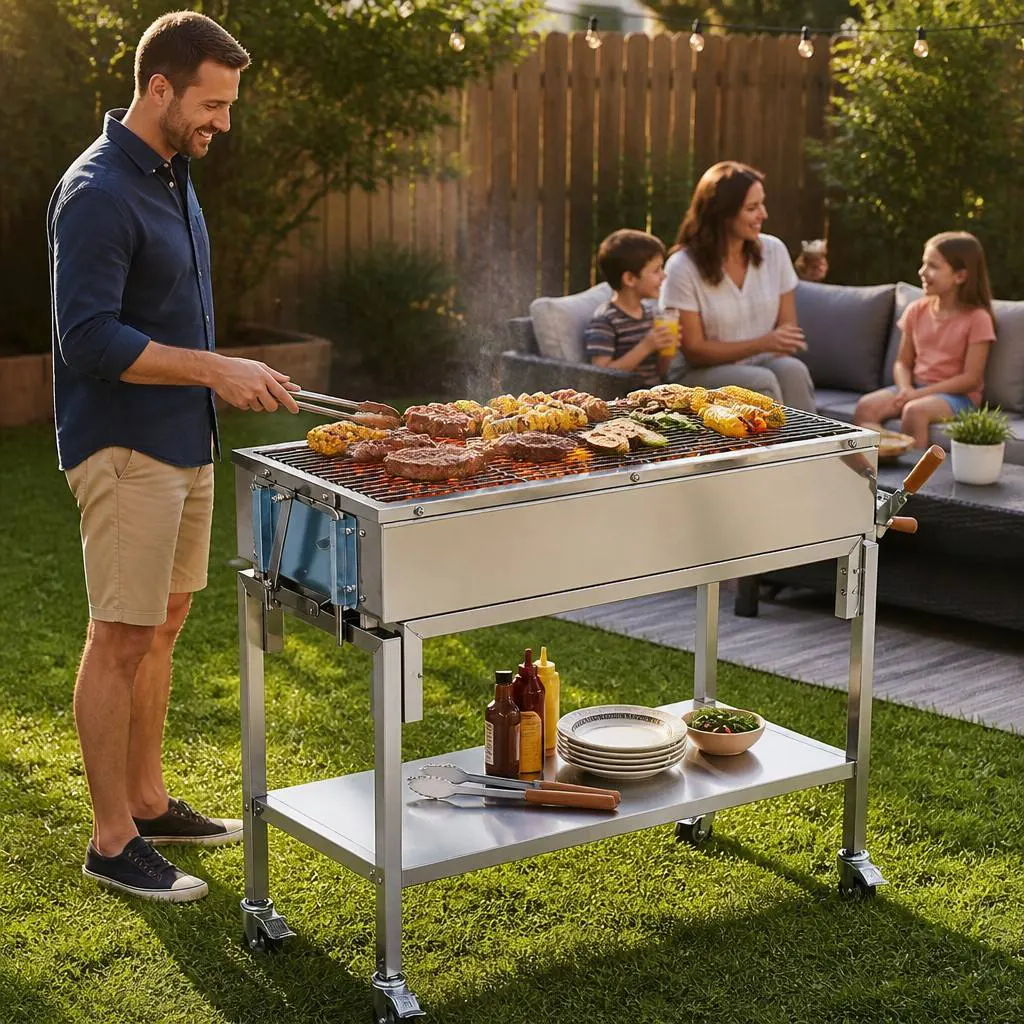
Q2: How much food can the extra-large cooking grate hold? A: The extra-large segmented grate is designed for batch cooking at scale. It comfortably accommodates 20-30+ steaks, several whole fish, or 30+ skewers simultaneously — enough output to serve a large backyard party or a busy catering event in one cooking round.
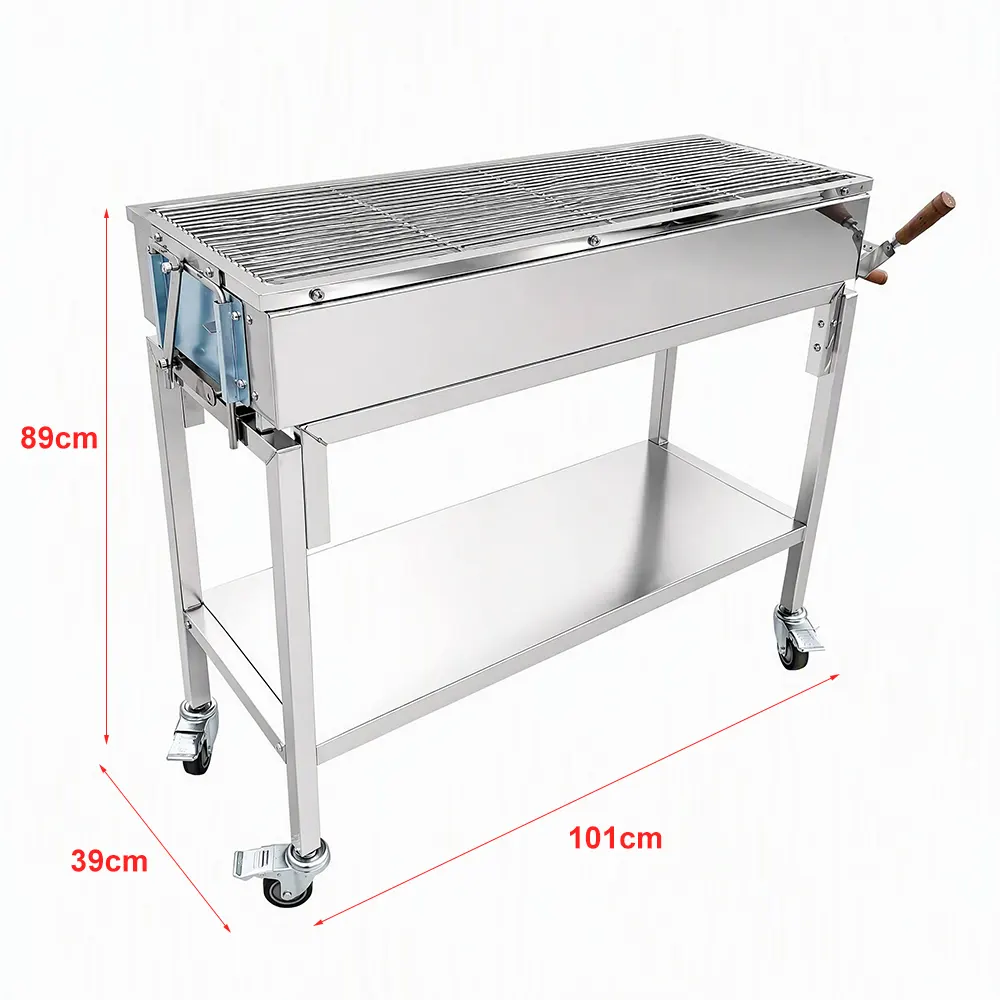
Q3: How does the crank height adjustment system work? A: The side-mounted crank drives a mechanical lifting mechanism that raises or lowers the entire cooking grate. Turning the crank clockwise or counterclockwise adjusts the grate height smoothly, allowing the chef to control heat intensity precisely — no tools, no electricity, just reliable mechanical control.
Q4: Are the casters strong enough for the weight of a loaded grill? A: Yes. The four heavy-duty swivel casters are rated to support the full loaded weight of the grill, including the firebrick lining, charcoal, and food. Two or more casters feature locking brakes that secure the unit firmly in place during active cooking.
Q5: What is the Order Quantity (MOQ) for private labeling? A: For laser-engraved branding on the stainless steel body, our MOQ starts at 30 units. For custom grate sizes or firebrick configuration changes, MOQ varies based on retooling requirements. Contact our sales team for a tailored quotation.
Q6: Which markets have the strongest demand for this type of grill? A: The firebrick-lined heavy-duty format resonates strongly with: (1) US backyard entertaining culture — high-end residential buyers who host large gatherings; (2) Australian outdoor living market — where built-in and mobile charcoal BBQ stations are standard; (3) European catering & event rental companies — which need equipment that survives heavy professional use; and (4) Middle Eastern hospitality — where charcoal grilling at scale is a culinary tradition.